


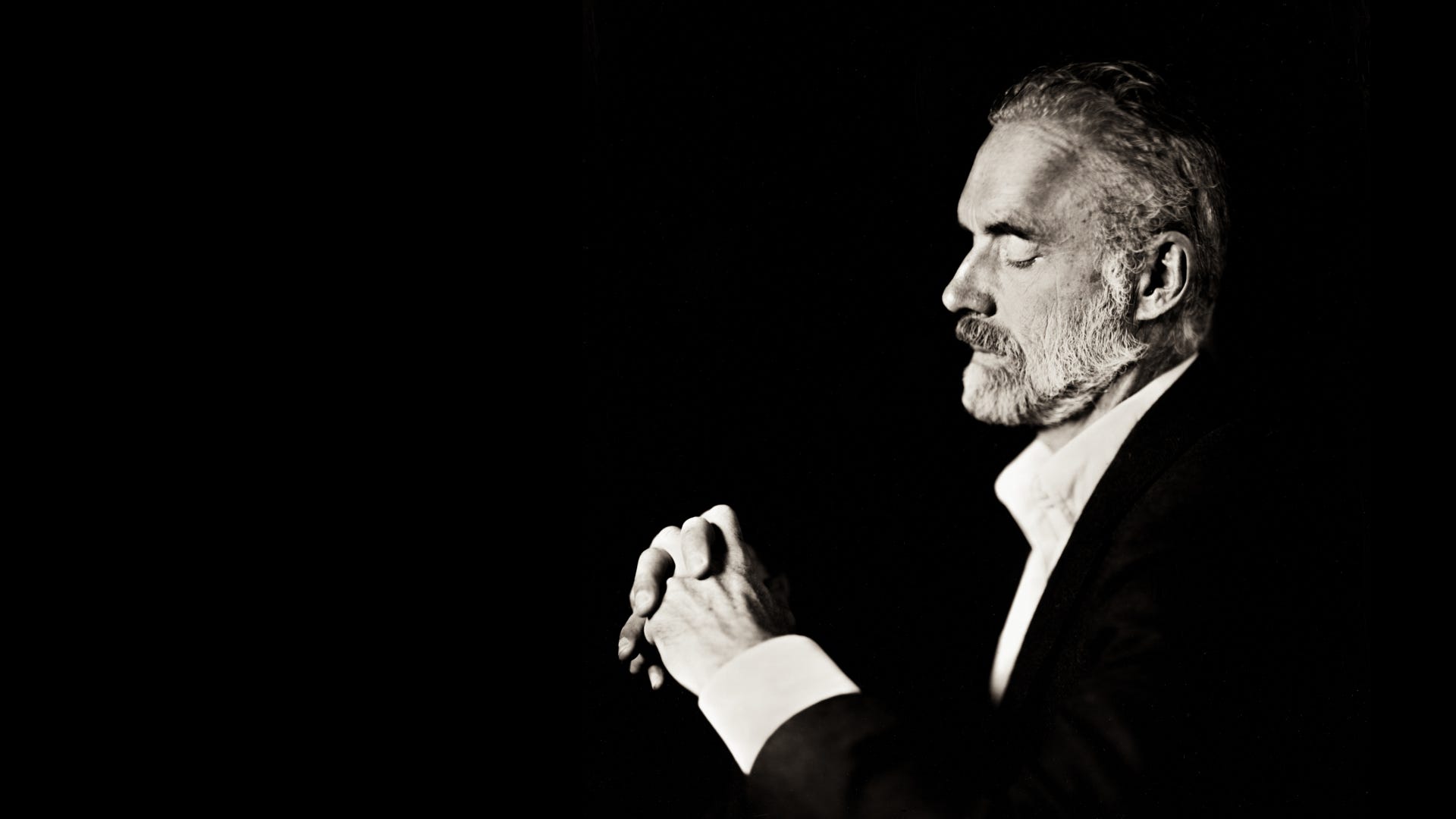
Few thinkers in the modern West have stirred such reflection, admiration, and controversy as Dr. Jordan Peterson. A clinical psychologist and professor by training, Peterson’s rise to prominence began in 2016 when he opposed compelled speech legislation in Canada. What followed was a global cultural moment. Through bestselling books, sold-out speaking tours, and viral Bible lectures, Peterson emerged as a lightning rod in the battle over the soul of Western Civilisation.
His work cuts across disciplines—psychology, philosophy, theology—and his central thesis is deceptively simple: meaning comes through responsibility, not self-expression. His intellectual journey, increasingly shaped by religious inquiry, has brought millions of listeners into deeper engagement with the biblical tradition, often for the first time.
Why did we invite him on?
Jordan has done more than perhaps any public figure to reawaken serious moral and spiritual inquiry in the modern West. He has helped young men and women find direction, intellectuals recover reverence, and conservatives articulate what they stand for, not just what they oppose.
What did we talk about?
In this conversation, we wanted to go deeper. We asked: Why does the biblical story still matter? Can sacrifice remain a coherent idea in a post-Christian world? And what, if anything, lies beyond liberalism?
We began with story. Peterson explained why narrative (not data) is our primary mode of meaning-making, and why the biblical stories, particularly those of sacrifice, are the deepest ever told. Drawing on Genesis, Exodus, and the Gospels, we explored how civilization is built on the logic of voluntary suffering: giving up what is lesser for the sake of what is higher.
We then turned to politics, with a warning that Western societies, having forgotten the sacred nature of limits, are collapsing into whim-worship. Sexual freedom, untethered from responsibility, is just another golden calf. The result isn’t liberation, it’s misery.
From consciousness and metaphysics to the moral structure of sacrifice, Peterson laid out a vision of human nature that is neither cynical nor naïve. It’s tragic, ordered, and ultimately hopeful.
Watch below:
A fine introduction, and a fair one. Peterson’s work has done something few modern thinkers manage: he’s made moral seriousness contagious. His insight that meaning comes through responsibility, not self-expression, has struck deeper than any culture-war slogan ever could.
What stands out in his talks on Genesis and the Gospels is that he treats Scripture not as folklore or mere psychology but as a living grammar of being. When he says that civilization rests on voluntary sacrifice, he’s naming what the Christian tradition calls caritas, that is, love that bears the cost of the good. There’s a reason so many young people who start with Peterson end up reading Augustine, Aquinas, or even the Gospels themselves (talking also about myself). He’s re-opened the doorway between psychology and theology. In doing so, what he does is show that our moral life can’t survive without transcendence. The real question, as your conversation hints, is whether the logic of sacrifice can stand once the Cross is removed from it. Peterson circles that mystery with growing reverence. The task now is not to idolize the messenger but to follow where his questions point (even is the messenger doesnt go there) toward the source of meaning itself, where responsibility and grace meet.
God bless Jordan.